


The Global Trade Landscape Is Changing. Where Are the Opportunities in 2027? HOMELIFE's 2027 Exhibition Calendar Is Officially Confirmed!
The global trade landscape has changed over the past two years.
Geopolitical tensions, tariff policies, trade barriers and supply chain restructuring continue to add uncertainty to the global market.
Markets that once felt familiar may be slowing down.
Long-standing customers may be exploring new suppliers. Costs, distribution channels and sourcing strategies are all evolving.
But a changing market does not mean disappearing demand.
Looking inward, growth opportunities are becoming increasingly limited.
From January to August 2026, China's total retail sales of consumer goods reached RMB 32.76 trillion, representing year-on-year growth of just 1.1%. Growth in August alone stood at only 0.4%.
As domestic competition intensifies, product homogenisation, price wars and rising channel costs continue to squeeze profit margins.
Looking outward, new growth opportunities are emerging.
From January to October 2026, China's total imports and exports of goods reached RMB 44.81 trillion, up 20% year on year. Exports alone amounted to RMB 25.99 trillion, increasing by 17.6%.
While domestic consumption grew by 1.1%, foreign trade expanded by 20%.
The Asian Development Bank forecasts that Southeast Asian economies will grow by 4.9% in 2027, while the WTO expects global merchandise trade volume to increase by 4.1%.
From January to October 2026, China's trade with ASEAN reached RMB 7.68 trillion, up 24.2% year on year—nearly three times the growth rate of China's trade with the EU (8.5%).
Emerging markets are no longer just a talking point. They are already generating tangible business opportunities.
Buyers are sending equally encouraging signals.
The 140th China Import and Export Fair (Canton Fair), which concluded in November 2026, welcomed 352,000 overseas buyers from 219 countries and regions, representing a year-on-year increase of 12.2% and setting a new record.
From the recovery of global trade to the rapid expansion of emerging markets, and the growing number of international buyers at trade fairs, the message is clear:
Demand has not disappeared. Buyers have not disappeared. What is changing is where and how they source.
So, how should businesses respond to this changing landscape?
Wait for markets to recover, or proactively explore new growth opportunities?
In times of uncertainty, waiting can be the costliest strategy. It does not necessarily reduce risk; it may simply mean missing the window of opportunity.
Demand is shifting. Distribution channels are being rebuilt. Buyers are looking for new suppliers. Every gap in the market is an opportunity waiting to be claimed.
Stability does not mean standing still.
True stability comes from understanding market changes, identifying the right opportunities and taking action.
Choose a market with genuine growth potential. Build an actionable exhibition schedule. Meet buyers, negotiate orders and establish distribution channels—all through international trade fairs.
9 Countries, 12 Exhibitions: Your 2027 Global Sourcing & Business Calendar Is Here!
In 2027, HOMELIFE will continue expanding its global presence, bringing 12 international home and gift exhibitions across 9 countries.
From Saigon in May to Mumbai in December, each exhibition is strategically scheduled around the sourcing cycles of its respective market.
Wherever the middle class is expanding and purchasing demand is growing, HOMELIFE will be there.
As markets continue to change, businesses must proactively seek new opportunities.
2027: Explore New Markets. Unlock New Growth.
↓
Southeast Asia | A Consumer-Driven Region with Strong Domestic Demand
Southeast Asia is one of the markets businesses should prioritise in 2027. Its growth is driven not only by external trade, but also by its own expanding consumer base.
01. Vietnam
Vietnam's GDP grew by 9.95% year on year in Q3 2026, its fastest quarterly growth since 2022. Cumulative growth for the first three quarters reached 9.01%, with the country's annual growth target set at double digits. In July 2026, the World Bank upgraded Vietnam to an upper-middle-income economy.
Consumer demand is equally encouraging.
In October 2026, retail sales of consumer goods and services increased by 14.7% year on year. Total retail sales for the first ten months reached VND 6,618.9 trillion, up 13.5%.
With a population of over 100 million, a young demographic profile and rising household incomes, Vietnam offers a rapidly expanding consumer market for homeware, kitchenware and gifts.
Trade policies also provide favourable conditions. Under the ASEAN-China Free Trade Area (ACFTA) 2023–2027 preferential tariff framework, the average tariff rate across applicable product categories is approximately 3.05%.
02. Indonesia
Indonesia is the only ASEAN economy with a GDP exceeding USD 1 trillion.
Its GDP grew by 5.47% year on year in Q3 2026, exceeding market expectations. Household consumption increased by 5.04%, accounting for 51.97% of GDP, while online transactions of goods and services rose by 22.02%.
In 2026, Indonesia's population is estimated at 287 million, with nominal GDP projected at approximately USD 1.48 trillion and GDP per capita at around USD 5,150.
Its e-commerce market is projected to reach USD 121 billion, accounting for 52% of Southeast Asia's total e-commerce market.
Capital relocation projects and affordable housing developments are creating concentrated demand for home furnishings and office supplies.
As one of Indonesia's most important import sources, China offers a competitive supply chain in homeware, kitchenware and gift products, supported by extensive product selection, large-scale manufacturing and flexible customisation capabilities.
Four HOMELIFE Exhibitions in Southeast Asia in 2027
Vietnam
-
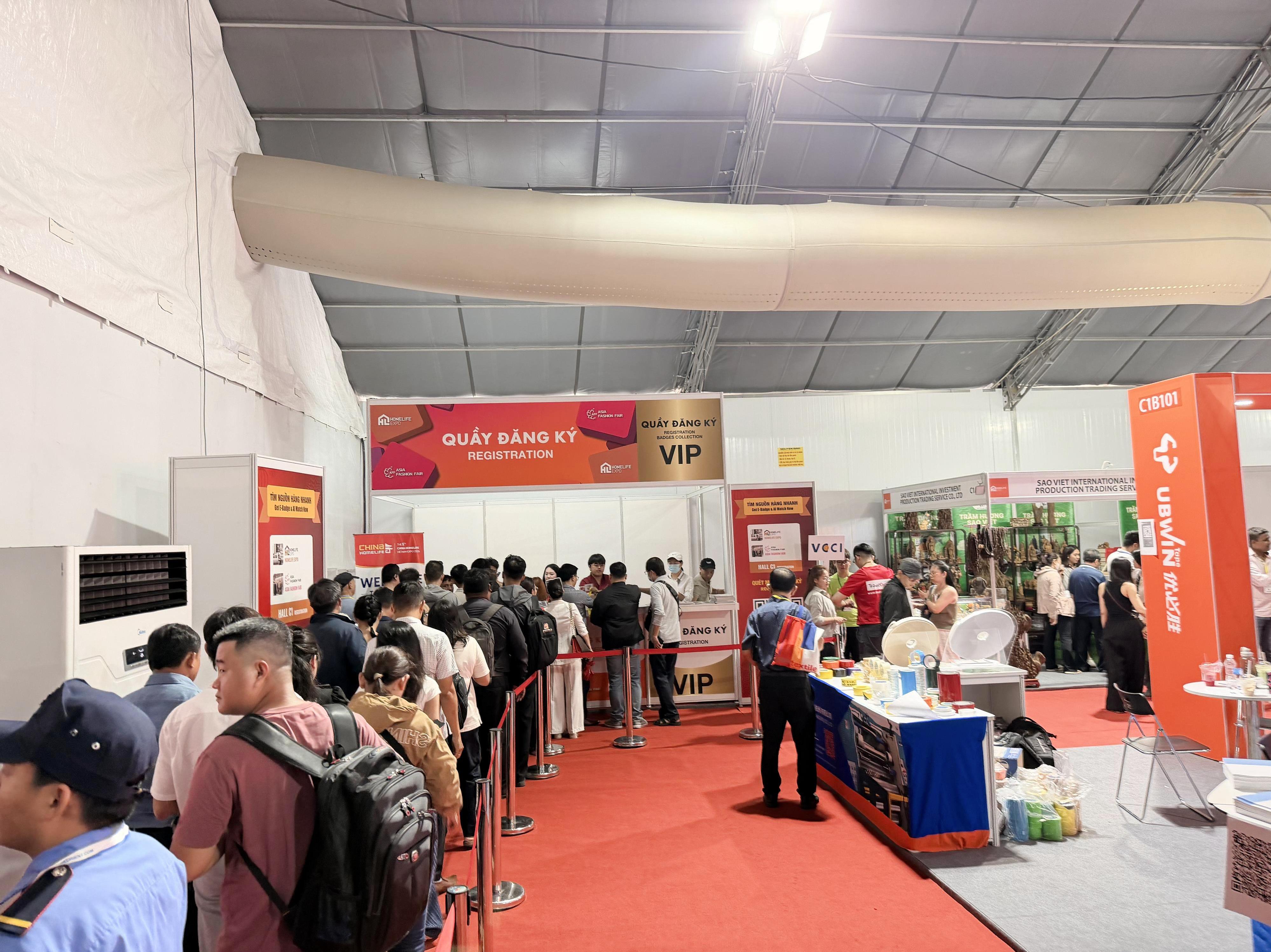
THE 7TH VIETNAM HOMELIFE EXPO 2027 | May 26–28, 2027 | Saigon Exhibition and Convention Center (SECC), Ho Chi Minh City
-
THE 8TH VIETNAM HOMELIFE EXPO 2027 | November 10–12, 2027 | Vietnam Exposition Center, Hanoi
Indonesia
-
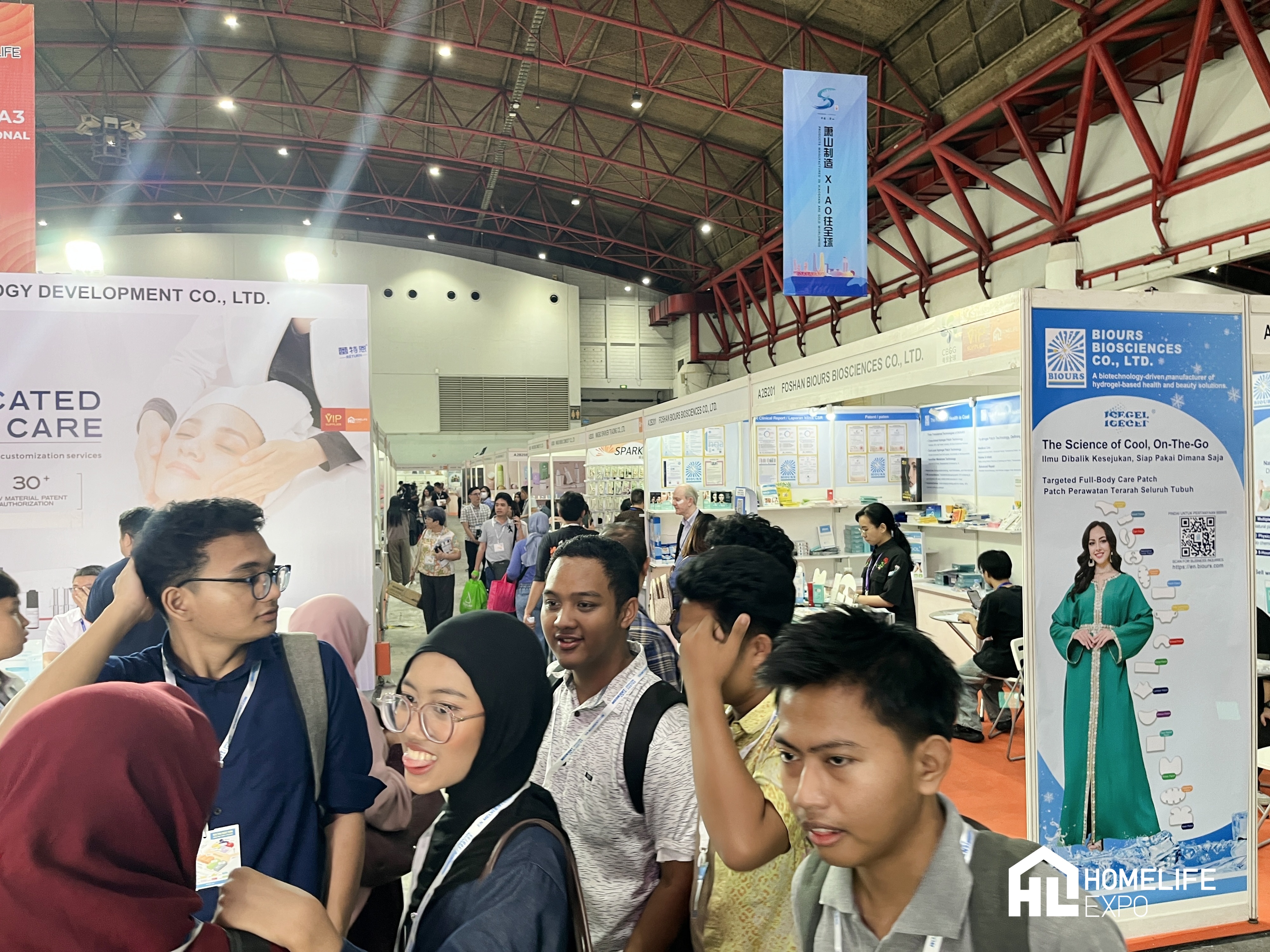
THE 13TH INDONESIA HOMELIFE EXPO 2027 | June 2–5, 2027 | Jakarta International Expo (JIExpo)
-
THE 14TH INDONESIA HOMELIFE EXPO 2027 | November 17–20, 2027 | Jakarta International Expo (JIExpo)
Joint Exhibition Strategy | Two Exhibition Windows, Two Core Markets
HOMELIFE offers two joint exhibition opportunities in Southeast Asia in 2027.
The first runs from Vietnam in May to Indonesia in June. The second connects Vietnam in November with Indonesia later that month.
With only four days between the two exhibitions in each window, exhibitors can participate in both markets within a single overseas business trip.
Two exhibitions, two strategic markets and access to nearly 400 million consumers across Southeast Asia.
↓
Middle East | High Import Dependence and Extensive Re-export Opportunities
The Middle East is one of the most attractive markets in HOMELIFE's global portfolio. Its demand is strongly supported by imports, while its strategic location makes it a major regional distribution hub.
01. UAE
The UAE has a population of approximately 12 million, with expatriates accounting for nearly 88%.
With the largest population group aged between 25 and 54, the UAE is a consumer market largely supported by its international population. Limited domestic manufacturing capacity means that everyday consumer goods rely heavily on imports.
The growing presence of Chinese businesses provides a clear indication of the market's potential.
In October 2026, the Dubai Business Forum – China was held in Shenzhen. Of the 854 attendees, 742 were Chinese entrepreneurs and investment representatives.
The Dubai Chamber of Commerce sent 112 business and government representatives, marking its largest-ever overseas delegation. The event facilitated 106 B2B meetings and resulted in 10 memorandums of understanding.
By the end of September 2026, the number of active Chinese member companies registered with Dubai Chambers had reached 6,650, more than double the figure recorded in 2016.
Online retail is expanding rapidly as well.
In 2025, the UAE's e-commerce market reached AED 42.2 billion (approximately USD 11.5 billion), accounting for 15.7% of total retail sales. The market recorded a five-year compound annual growth rate of 19% and is projected to reach AED 67.2 billion by 2030.
Its geographical advantage is equally significant. Located at the crossroads of Asia, Europe and Africa, the UAE serves as a gateway to nearly 2 billion consumers across the Middle East, Africa and South Asia.
02. Saudi Arabia
Saudi Arabia's growth story is closely linked to institutional reform and economic diversification.
Under Vision 2030, the new Investment Law came into effect in February 2025, introducing a registration-based investment framework, a negative list approach and equal treatment for domestic and foreign investors.
Combined with relatively low tariffs of approximately 5% and limited domestic light manufacturing capacity, these changes are creating more favourable conditions for imports. Foreign direct investment inflows increased by 14% in 2025.
The demand outlook is equally promising.
Saudi Arabia's homeownership rate reached 66.24% in 2025. Its home furnishings market was valued at approximately USD 4.49 billion in 2024 and is projected to reach USD 5.98 billion by 2029.
Its population provides a strong foundation for long-term consumption. In 2024, Saudi Arabia had approximately 35.3 million residents, with annual population growth of 4.7%. Children aged 0–14 accounted for 33.5% of the population.
Trade figures further reinforce the opportunity.
China is Saudi Arabia's largest trading partner. Bilateral trade reached USD 108.159 billion in 2025, with Chinese exports to Saudi Arabia amounting to USD 53.422 billion, up 6.7% year on year.
Saudi Arabia's e-commerce market was valued at approximately USD 27.96 billion in 2025 and is projected to exceed USD 49.49 billion by 2030. Cross-border transactions account for approximately 35%.
Three HOMELIFE Exhibitions in the Middle East in 2027
-
THE 21ST UAE HOMELIFE EXPO 2027 | June 14–16, 2027 | Dubai World Trade Centre, UAE
-
THE 22ND UAE HOMELIFE EXPO 2027 | December 13–15, 2027 | Dubai World Trade Centre, UAE
-
THE 2ND SAUDI ARABIA HOMELIFE EXPO 2027 | December 20–22, 2027 | Riyadh Front Exhibition & Conference Center, Saudi Arabia
Joint Exhibition Strategy | Regional Distribution Hub + Local Market Growth
The December exhibitions in Dubai and Riyadh are separated by just four days.
Dubai offers access to international buyers, re-export networks and regional distribution channels, while Riyadh provides opportunities in domestic retail and project procurement.
One trip, two exhibitions, and a broader reach across the Middle East, North Africa and South Asia.
↓
Latin America | New Growth Opportunities Driven by Nearshoring and Supply Chain Diversification
Latin America's value lies in its strategic geographical position and the gaps in its domestic supply chains.
01. Mexico
Mexico is the second-largest economy in Latin America and a key link in the North American supply chain.
In 2025, Mexico's retail market reached MXN 6.47 trillion, increasing by 8% year on year. Retail e-commerce reached MXN 941 billion, up 19.2%, accounting for 17.7% of total retail sales.
Mexico's home and gift market was valued at approximately USD 26.78 billion in 2024 and is projected to grow at a compound annual rate of 4.6% from 2025 to 2028, exceeding USD 31 billion by 2028.
Its import structure is particularly noteworthy.
In 2025, Mexico's total imports reached approximately USD 663.6 billion, of which imports from China accounted for around USD 133.2 billion, representing 20.1%.
Mexico also has free trade agreements with more than 50 countries. Products meeting the relevant rules of origin can benefit from preferential tariff treatment when entering markets covered by these agreements.
02. Brazil
Brazil is Latin America's largest consumer market, with a population of over 200 million and an urbanisation rate of approximately 72%. Its retail distribution network is well established.
In 2026, Brazil's nominal GDP is estimated at USD 2.65 trillion, with GDP per capita at approximately USD 12,400. Its GDP grew by 1.9% year on year in the first half of 2026.
Outdoor and sports products are among the country's most recognisable consumer segments.
Brazil's sports equipment market was valued at approximately USD 14.2 billion in 2025 and is projected to reach around USD 24.5 billion by 2033.
With limited domestic production capacity and considerable reliance on imports, Chinese suppliers are well positioned to serve demand for outdoor furniture, sports equipment and leisure products through competitive pricing and product variety.
Policy developments are also helping reduce trade costs.
During President Lula's visit to China in May 2025, more than 20 agreements were signed, alongside import tariff exemptions for 628 product categories. Local currency settlement and blockchain-based traceability initiatives are also being advanced.
Two HOMELIFE Exhibitions in Latin America in 2027
-
THE 12TH MEXICO HOMELIFE EXPO 2027 | September 7–9, 2027 | Santa Fe Exhibition Center, Mexico
-
THE 14TH BRAZIL HOMELIFE EXPO 2027 | September 21–23, 2027 | São Paulo Expo, Brazil
↓
Europe | Poland: The Gateway to Central and Eastern Europe
Poland is the key market for businesses looking to expand into Europe in 2027.
Poland is the largest economy in Central and Eastern Europe and the sixth-largest economy in the European Union.
In 2025, its GDP exceeded USD 1 trillion for the first time, reaching USD 1.0355 trillion. Its economy grew by 3.6%, ranking fourth among EU member states, with GDP per capita at approximately USD 28,400.
Strategically located at the heart of Europe, Poland is an important logistics and distribution hub.
Approximately 90% of China-Europe freight trains pass through or terminate in Poland, making it a key logistics gateway under the Belt and Road Initiative.
Entering Poland means gaining access to the wider European market.
Consumer demand also remains resilient.
In August 2026, Poland's retail sales increased by 3.8% year on year, while cumulative growth from January to August reached 3.4%.
E-commerce retail sales increased by 17.5%, accounting for 9% of total retail sales.
China-Poland bilateral trade reached USD 48.693 billion in 2025, up 8.3% year on year.
China is Poland's second-largest import source, accounting for 14.6% of its total imports. Chinese products have already established a significant presence in the local import market.
Gifts and office supplies represent particularly promising segments.
Poland's office and stationery market is expected to grow at a compound annual rate of approximately 5.8% from 2025 to 2033.
Its gift card and reward card market was valued at approximately USD 2.07 billion in 2025 and is projected to reach USD 2.77 billion by 2029.
HOMELIFE Poland 2027
THE 17TH POLAND HOMELIFE EXPO 2027 | September 14–16, 2027 | PTAK Warsaw Expo, Poland
↓
Africa | Established Distribution Channels, Underserved Product Categories
South Africa is one of Africa's most developed consumer markets and one of the most accessible markets for establishing distribution networks.
South Africa's economic growth remains moderate, with the IMF forecasting growth of 1.3% in 2027.
Its demographic structure provides a foundation for long-term consumer demand.
In 2026, South Africa's population is estimated at approximately 63.52 million, representing year-on-year growth of 1.2%.
People under the age of 15 account for approximately 25.6% of the population, or 16.25 million.
Gauteng, the country's most commercially active province, has a population of approximately 16.3 million, accounting for 25.7% of the national total.
The office supplies market is a stable, established segment.
It was valued at approximately USD 390 million in 2025 and is expected to reach USD 394 million in 2026. Limited local supply and high import dependence create opportunities for international suppliers.
An emerging opportunity also lies in the hair and wig industry.
Africa is the world's second-largest wig-consuming market, with an estimated market value of approximately USD 6 billion in 2025.
Consumers typically replace their wigs every two to three months, with synthetic wigs accounting for a major share of demand due to their affordability.
China accounts for 64.9% of global wig exports, making it a dominant supplier in this industry.
In 2025, China's wig exports to South Africa reached USD 221 million, up 57% year on year.
South Africa has become China's fourth-largest export destination for wigs.
This is a highly competitive segment for Chinese suppliers and an opportunity that deserves greater attention.
HOMELIFE South Africa 2027
THE 11TH SOUTH AFRICA HOMELIFE EXPO 2027 | September 27–29, 2027 | Gallagher Convention Centre, Johannesburg, South Africa
↓
South Asia | One of the World's Fastest-Growing Emerging Markets
India is one of the most promising growth markets for 2027 and the final destination of HOMELIFE's annual exhibition calendar.
India is one of the world's fastest-growing major economies.
Its nominal GDP for FY2025–26 is estimated at approximately USD 3.92 trillion, ranking sixth globally.
The IMF forecasts real GDP growth of 7.0% for FY2026–27. By 2027, India's nominal GDP is projected to reach USD 4.52 trillion, potentially making it the world's fourth-largest economy.
Its enormous economic scale and sustained growth provide a strong foundation for consumer market expansion.
In 2026, India's population is estimated at approximately 1.477 billion, making it the world's most populous country.
With a median age of around 29 and an urbanisation rate of approximately 36%, India has a large and relatively young consumer base.
First-time homebuyers, household upgrades and everyday consumption are all contributing to growing demand for home and household products.
Tax reforms are also influencing consumer markets.
Effective September 22, 2025, India restructured its GST system around two main tax rates of 5% and 18%, with a special 40% rate applying to certain products.
GST on everyday products such as shampoo, soap and toothpaste was reduced from 18% to 5%. Selected wooden, ceramic and metal kitchenware products also saw their tax rates reduced from 12% to 5%.
These changes are expected to support consumption in relevant household and daily-use product categories.
Stationery and office supplies offer another stable growth opportunity.
According to Deep Market Insights, India's stationery market is projected to grow from USD 3.45 billion in 2025 to USD 5.34 billion by 2034.
Meanwhile, UDISE+ data shows that approximately 247 million students are enrolled in Indian schools during the 2025–26 academic year.
A vast student population, together with ongoing demand for education, learning and office supplies, provides a stable consumer base for stationery, school products and office essentials.
HOMELIFE India 2027
THE 10TH INDIA HOMELIFE EXPO 2027 | December 28–30, 2027 | Bombay Exhibition Centre, Mumbai, India
Nine Countries. Seven Time Zones.
From Saigon to Mumbai.
One year. Twelve exhibitions. Three continents of business opportunities.
A year may seem long, but there is only so much time to prepare, explore and expand.
Markets will continue to change, but opportunities favour those who take action first.
2027. Your global exhibition journey starts here.
Bring your products to the world.
About HOMELIFE International Home & Gift Expo
HOMELIFE EXPO is a global exhibition series dedicated to supporting the international expansion of the home and gift industry.
We provide an efficient B2B platform connecting Chinese manufacturers and suppliers with international buyers, helping bring quality Chinese products to homes and businesses around the world.
With years of industry experience, HOMELIFE has built a database of over 3 million global buyer resources and developed extensive expertise in overseas market operations.
Through innovative, data-driven exhibition services, HOMELIFE has helped more than 200,000 Chinese companies expand internationally and establish their presence in overseas markets.
Product Categories
1. Home & Household Products
Home storage and organisation, cleaning products, laundry care, drinkware and insulated containers, household paper products, disposable hygiene products, home décor, tabletop accessories, glassware, plastic products, ceramic products, metal products, silicone products, household packaging, umbrellas, shopping bags, air fresheners, essential oils and home fragrances, pest control products, floor mats and kitchen mats.
2. Kitchenware & Tableware
Cookware, knives, cooking utensils, baking supplies, tableware, dinnerware, catering supplies, food storage containers, kitchen cleaning products, washing supplies, kitchen organisers, disposable products, eco-friendly and biodegradable tableware, and kitchen accessories.
3. Beauty & Personal Care
Beauty and cosmetics, makeup tools, personal care products, household and personal hygiene products, health and wellness products, scalp and hair care, skincare and SPA products, beauty equipment, salon supplies, nail and eyelash products, mirrors, semi-permanent makeup and aesthetic products, wigs and hair extensions, perfumes and fragrances, cosmetics, OEM/ODM services and packaging solutions.
4. Outdoor, Leisure & Sports
Tents, outdoor tableware, camping equipment, outdoor accessories, BBQ equipment and grills, fitness and sports equipment, balls and billiards equipment, yoga products, physical training equipment, recreational products, cycling accessories, water sports and beach products, outdoor electronics and smart devices, gardening supplies and outdoor lifestyle bags.
5. Gifts & Office Supplies
Office stationery, writing instruments, filing and document management products, notebooks and calendars, paper and paper products, arts and crafts supplies, educational and classroom products, festive and entertainment products, handicrafts, trophies and medals, souvenirs, badges, customised gifts, keychains, photo frames, travel souvenirs, clocks and watches, greeting cards, corporate gifts, promotional gift sets, gift wrapping paper and packaging, jewellery boxes and gift boxes, lighters and smoking accessories.
6. Mother, Baby & Toys
Diapers, baby wipes and other infant hygiene products, baby care and toiletries, strollers, cribs and child safety seats, feeding products, infant food and complementary foods, nutritional products, early childhood education products, children's clothing and footwear, baby textiles, plush toys and dolls, Montessori educational toys, remote-controlled and motorised toys, designer toys and collectibles, STEM and science exploration toys, outdoor toys, IP-licensed and co-branded toys, sensory integration products and more.
7. Food Products
Grains and edible oils, seasonings and spices, snacks and packaged foods, beverages, tea and alcoholic beverages, staple foods, cereals and instant food products, nutritional and health foods, food packaging and related supplies.
8. Pet Products
Pet food and nutritional supplements, pet supplies, veterinary and pet healthcare products, aquarium supplies, bird and reptile products, poultry and livestock products, pet-friendly products and pet retail services.
For more exhibition information, follow our official WeChat account:
HOMELIFE International Home & Gift Expo
Or visit our official website:
www.homelifexpo.com






 浙公网安备33019202002778号